Product Design System
Product systems for high-complexity operational platforms
The strongest operational products reduce uncertainty, clarify decisions, and create confidence.
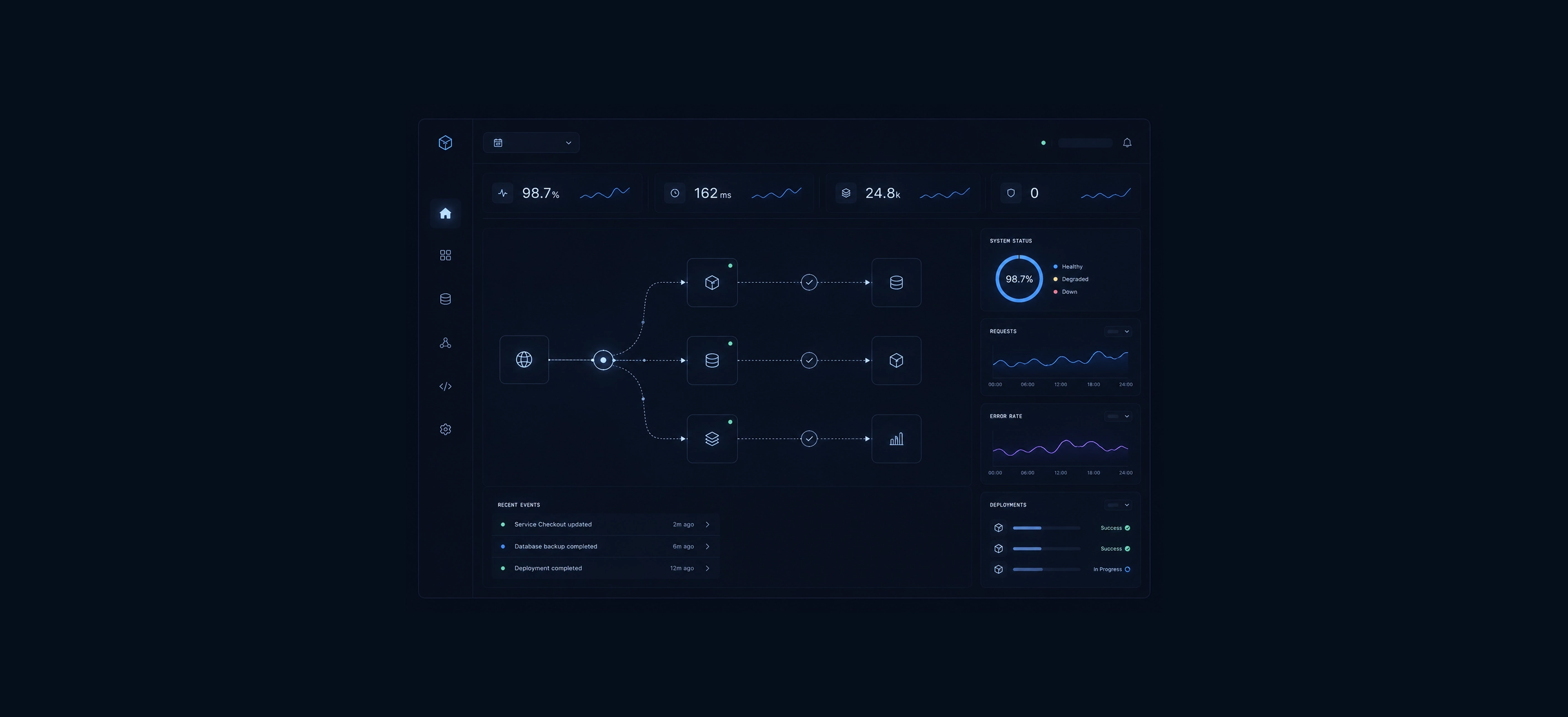
Product Complexity
Most product friction begins when UX becomes more complex than the workflow itself.
Product systems fail when users cannot clearly interpret structure, hierarchy, workflow progression, permissions, or operational logic. Clarity becomes critical as platforms scale in complexity.
Products become harder to interpret as they scale
Interfaces often accumulate features, states, and workflows without a clear structural system connecting them.
Operational flows feel fragmented
Users lose confidence when dashboards, onboarding, workflows, and actions feel disconnected from each other.
Trust weakens under complexity
In high-stakes platforms, unclear hierarchy and inconsistent interaction patterns create hesitation and decision fatigue.
Users struggle to understand system behavior
Most operational products explain features individually but fail to clarify how the overall system works together.
What We Design
Product systems built for operational clarity, scalability, and trust.
Complex platforms require more than visual polish. They require structure, workflow logic, interaction consistency, and systems that remain understandable as products scale.
Operational Product Systems
Designing clearer dashboard structures, hierarchy systems, and operational interfaces for complex products.
Workflow & Decision UX
Structuring multi-step workflows, actions, permissions, and operational states into understandable user progression.
Scalable Design Architecture
Creating consistent interaction systems that scale across features, modules, roles, and platform complexity.
Trust & Product Clarity
Improving confidence through clearer hierarchy, predictable interaction patterns, and operational readability.
Example Case Study
Designing operational clarity into a fintech product system.
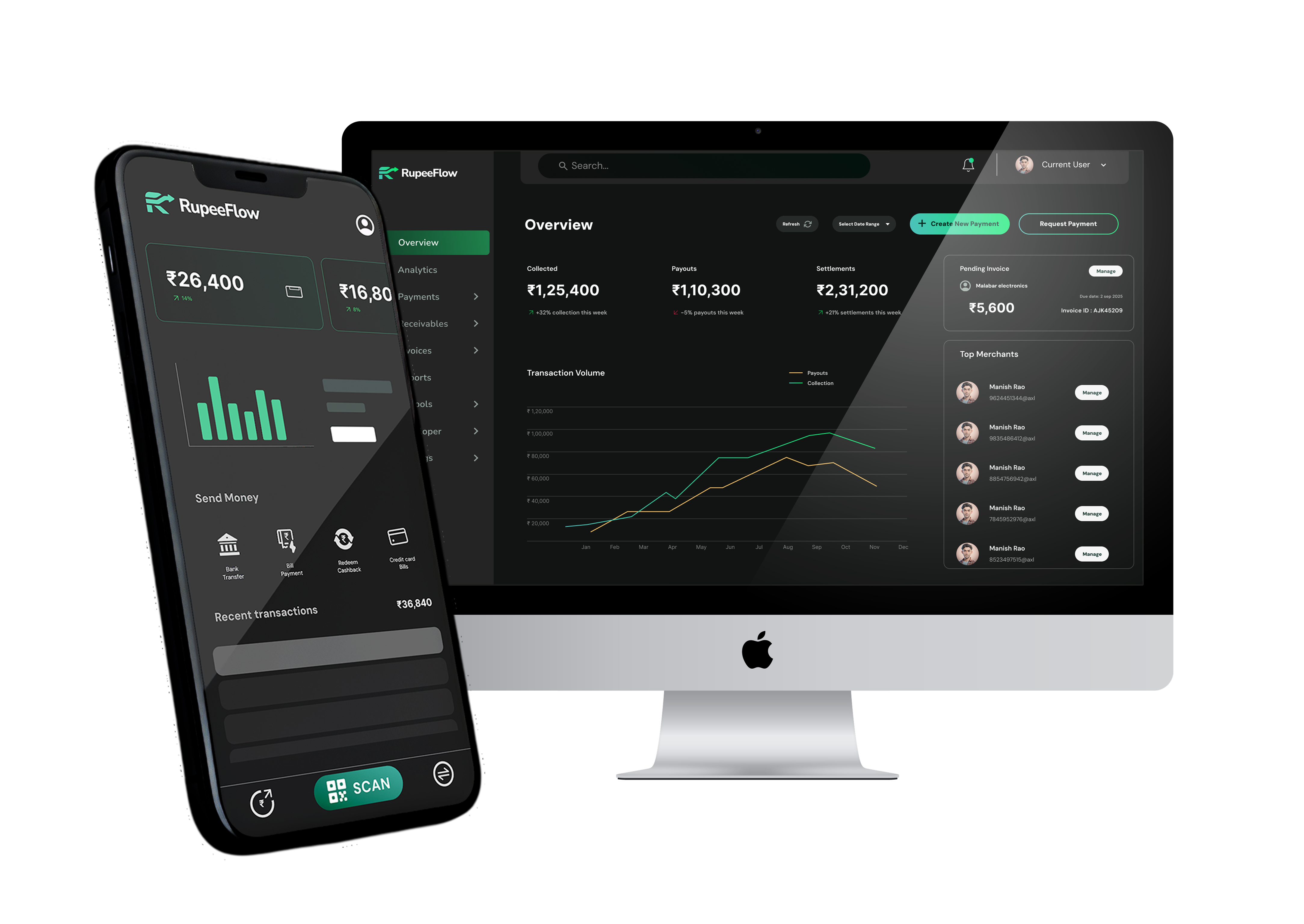
RupeeFlow’s platform experience was redesigned across onboarding, authentication, trust systems, and operational workflows to improve clarity, reduce hesitation, and create a more cohesive product experience.
Designing trust into a fintech onboarding system | RupeeFlow
Building a cohesive fintech experience across brand identity, onboarding UX, authentication flows, and product systems to reduce hesitation and improve trust perception.
Outcome
Improved Trust & Onboarding Clarity
Focus
Brand Systems and Product UX
Product systems
Structured product systems across operational workflows and high-complexity platforms.
Designed for products where clarity, workflow structure, operational confidence, and scalable UX systems directly affect user trust and product adoption.
Operational fintech dashboards
Multi-role SaaS platforms
Internal admin systems
Workflow automation products
AI operational platforms
Financial reporting interfaces
Data-heavy enterprise tools
Infrastructure monitoring systems
Decision-support platforms
Cross-functional operational products
Analytics and intelligence dashboards
CRM and sales operation systems
Compliance and verification platforms
Trading and investment interfaces
B2B workspace products
Complex onboarding environments
Operational workflow systems
Multi-step product ecosystems
Role-based enterprise products
High-complexity product architectures
Outcomes
Better product systems reduce operational friction before it affects user behavior.
The goal is not interface polish alone. The goal is improving clarity, reducing interpretive effort, and helping users move through operational workflows with more confidence and less hesitation.
Improved operational clarity
Users understood workflows, hierarchy, and product structure more intuitively across complex systems.
Reduced workflow confusion
Interfaces became easier to navigate with clearer sequencing, interaction logic, and decision visibility.
Higher product confidence
Operational platforms felt more reliable, structured, and trustworthy during critical user actions.
Scalable product consistency
Design systems created stronger alignment across dashboards, workflows, modules, and product states.
Process
Workflow
Structured around operational clarity, workflow consistency, scalable UX systems, and decision-oriented product architecture across high-complexity platforms.
STEP 01
Product Structure Analysis
Understanding where operational complexity, unclear hierarchy, workflow inconsistency, and user confusion begin affecting product comprehension.
STEP 02
Workflow & System Mapping
Mapping dashboards, navigation systems, operational flows, permissions, decision paths, and interaction architecture across the platform.
STEP 03
Product System Restructuring
Restructuring workflows, hierarchy systems, interaction logic, and interface consistency into a more scalable operational UX system.
STEP 04
Validation & Refinement
Refining clarity through usage reviews, operational edge cases, stakeholder feedback, workflow testing, and product behavior analysis.
START A CONVERSATION
Reduce product complexity
and create clearer operational workflows
Usually replies within a few hours
Frequently
Asked
Questions
Questions teams usually ask around onboarding, trust systems, product clarity, dashboards, and operational UX.
We work on fintech platforms, operational software, dashboards, onboarding systems, analytics tools, infrastructure products, and trust-heavy digital experiences where clarity directly affects user decisions.