Brand Identity and Trust Perception
Perception shapes trust before products prove themselves.
Trust is not created by branding alone. It is reinforced through messaging, and operational clarity.
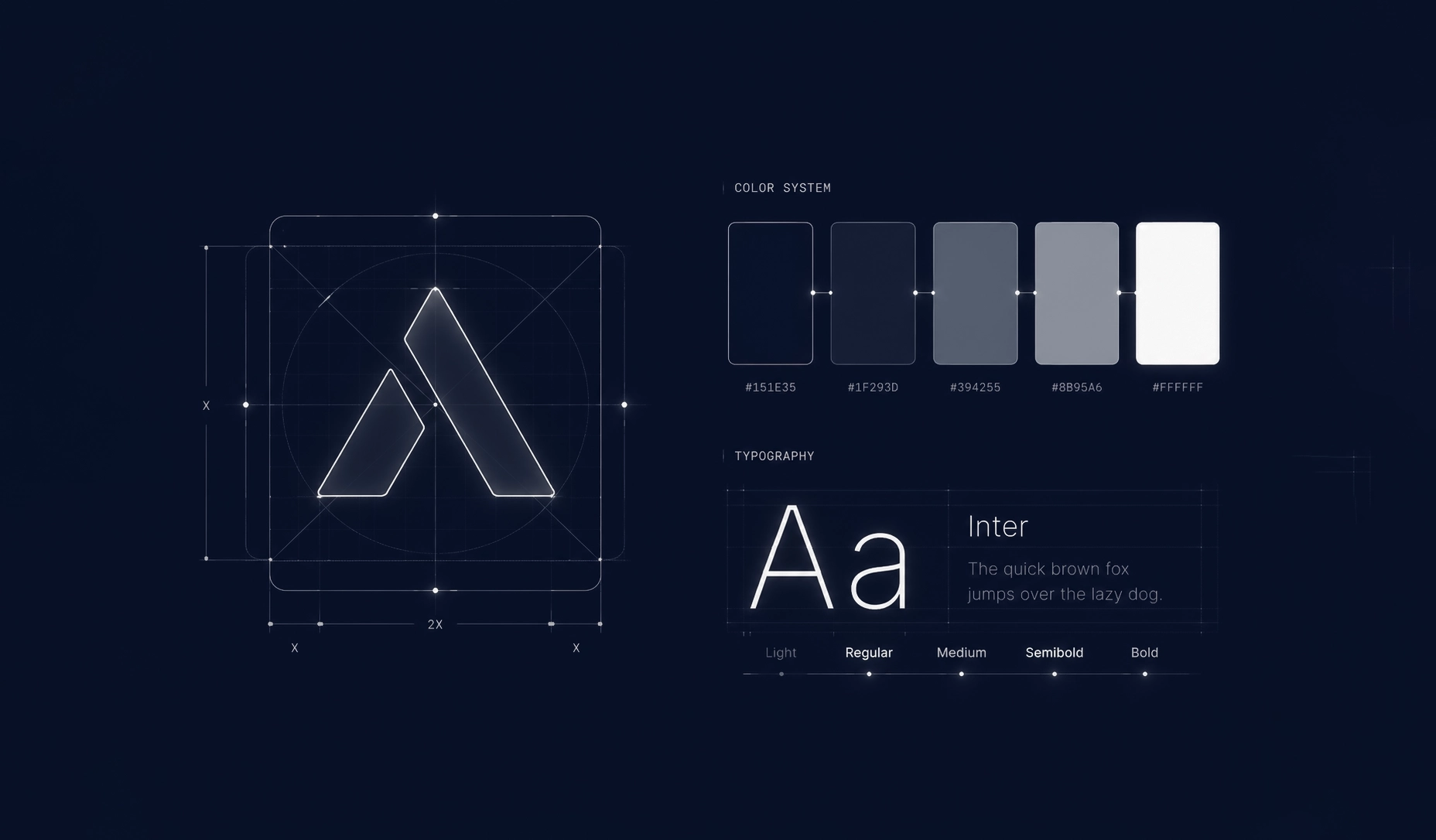
Brand Identity & Communication
Most perception problems begin with inconsistent identity and unclear communication systems.
Users form trust judgments long before onboarding begins. Visual identity, tone of voice, and communication consistency directly shape credibility and perceived product quality.
The product feels less credible than it actually is
Weak visual identity and inconsistent communication reduce trust before users fully understand the product.
Brand identity lacks consistency across touchpoints
Interfaces, onboarding, website systems, and communication layers often feel disconnected instead of unified.
Tone of voice creates confusion instead of confidence
Generic, inconsistent, or overly technical communication weakens clarity and makes products harder to trust.
Strong products become visually forgettable
Without a clear identity system, products struggle to build recognition, differentiation, and long-term perception.
What We Work On
We design brand systems that improve trust, perception, and product credibility.
Strong products often fail perception before users fully understand the product itself. Identity systems and communication consistency shape how trust gets formed.
Brand Identity Systems
Build cohesive visual systems that increase recognition, consistency, and perceived product quality.
Tone of Voice Direction
Align product communication, messaging, and interaction language into a clearer communication system.
Trust & Credibility Design
Strengthen perceived legitimacy across onboarding, interfaces, websites, and product touchpoints.
Perception Consistency
Create consistent perception across product systems, marketing, onboarding, and communication layers.
Example Case Study
Building perception systems for AI visibility and operational trust.
Copeek’s brand and dashboard systems were designed to improve visibility interpretation, strengthen product credibility, and make AI perception monitoring feel operationally understandable.
Designing AI visibility infrastructure | Copeek
Creating an operational monitoring platform that helps brands track AI perception, competitive visibility, and narrative consistency across emerging AI systems.
Outcome
Improved AI Visibility Clarity
Focus
Dashboard Direction and Brand Systems

Common brand perception scenarios
Identity systems built for products that need stronger trust, consistency, and perceived credibility.
Especially for operational products where visual consistency, communication clarity, and perception directly influence trust and product interpretation.
Fintech and payment platforms
AI and infrastructure products
Operational SaaS systems
Enterprise workflow platforms
Data-heavy software products
Investor-facing fintech products
Dashboard and analytics systems
Internal operational tools
B2B product ecosystems
High-trust digital products
Products with weak trust perception
Brands lacking visual consistency
Generic SaaS brand systems
Products struggling with credibility
Operational tools with poor identity
Complex products needing clarity
Founders repositioning perception
Products with fragmented communication
Teams refining tone of voice
Scaling products needing consistency
Outcomes
Better identity systems improve how products get interpreted, trusted, and remembered.
Brand perception shapes trust before onboarding or product adoption begins. Clear identity and communication systems help products feel more legitimate, consistent, and operationally mature.
Improved trust perception
Products felt more credible, structured, and operationally reliable across touchpoints.
Stronger brand consistency
Identity systems became more cohesive across product, website, onboarding, and communication.
Clearer communication systems
Tone of voice and messaging became easier to understand and more confidence-building.
Better product recognition
Products developed stronger differentiation, memorability, and perceived market maturity.
Process
Workflow
Structured around perception clarity, visual consistency, trust systems, identity direction, and communication coherence across digital product ecosystems.
STEP 01
Discovery & Moodboarding
Understanding brand perception gaps, product personality, market positioning, visual direction, and how users currently interpret the product.
STEP 02
Conceptualization & Sketching
Exploring identity concepts, typography direction, visual language, symbolic systems, communication tone, and early creative exploration.
STEP 03
Design Execution
Building cohesive brand systems across identity, color systems, typography, visual hierarchy, communication layers, and digital touchpoints.
STEP 04
Refinement & Iteration
Refining consistency, scalability, perception alignment, and visual clarity through feedback, testing, and repeated communication scenarios.
START A CONVERSATION
Elevate your product's perception
and build stronger trust with your users.
Usually replies within a few hours
Frequently
Asked
Questions
Questions teams usually ask around onboarding, trust systems, product clarity, dashboards, and operational UX.
We work on fintech platforms, operational software, dashboards, onboarding systems, analytics tools, infrastructure products, and trust-heavy digital experiences where clarity directly affects user decisions.