Website Design and Positioning
Websites fail when users cannot understand the value fast enough.
Clarity, narrative structure, and positioning determine whether users continue or leave.

Website Positioning
Most websites fail because the positioning is unclear before the design is even evaluated.
Strong visual design cannot compensate for weak messaging, fragmented narratives, or unclear differentiation. Positioning determines whether users understand, trust, and remember the brand.
Websites look polished but fail to communicate positioning
Most websites focus on visual aesthetics while failing to clarify what the company actually does, who it serves, and why it matters.
Brand messaging becomes inconsistent across pages
Different sections communicate different narratives, creating confusion instead of reinforcing a clear market perception.
Users leave with unanswered questions
When positioning lacks clarity, users struggle to understand the product, evaluate relevance, or justify taking action.
Differentiation disappears in crowded markets
Many companies describe themselves using generic category language, making them visually present but strategically invisible.
What We Build
Websites designed to improve clarity, positioning, and market perception.
Strong websites are not built through visuals alone. They require clear positioning, structured messaging, scalable systems, and narrative consistency across the entire user journey.
Strategic Website Systems
Designing websites that communicate structure, product value, positioning, and business credibility with clarity.
Messaging & Narrative Architecture
Structuring headlines, sections, flows, and content hierarchy to reduce confusion and improve understanding.
Scalable Brand Consistency
Creating visual and messaging systems that remain coherent across pages, products, campaigns, and future growth.
Positioning & Differentiation
Clarifying market perception by defining what makes the company relevant, distinct, and strategically memorable.
Example Case Study
Improving fintech credibility through website positioning and trust systems.
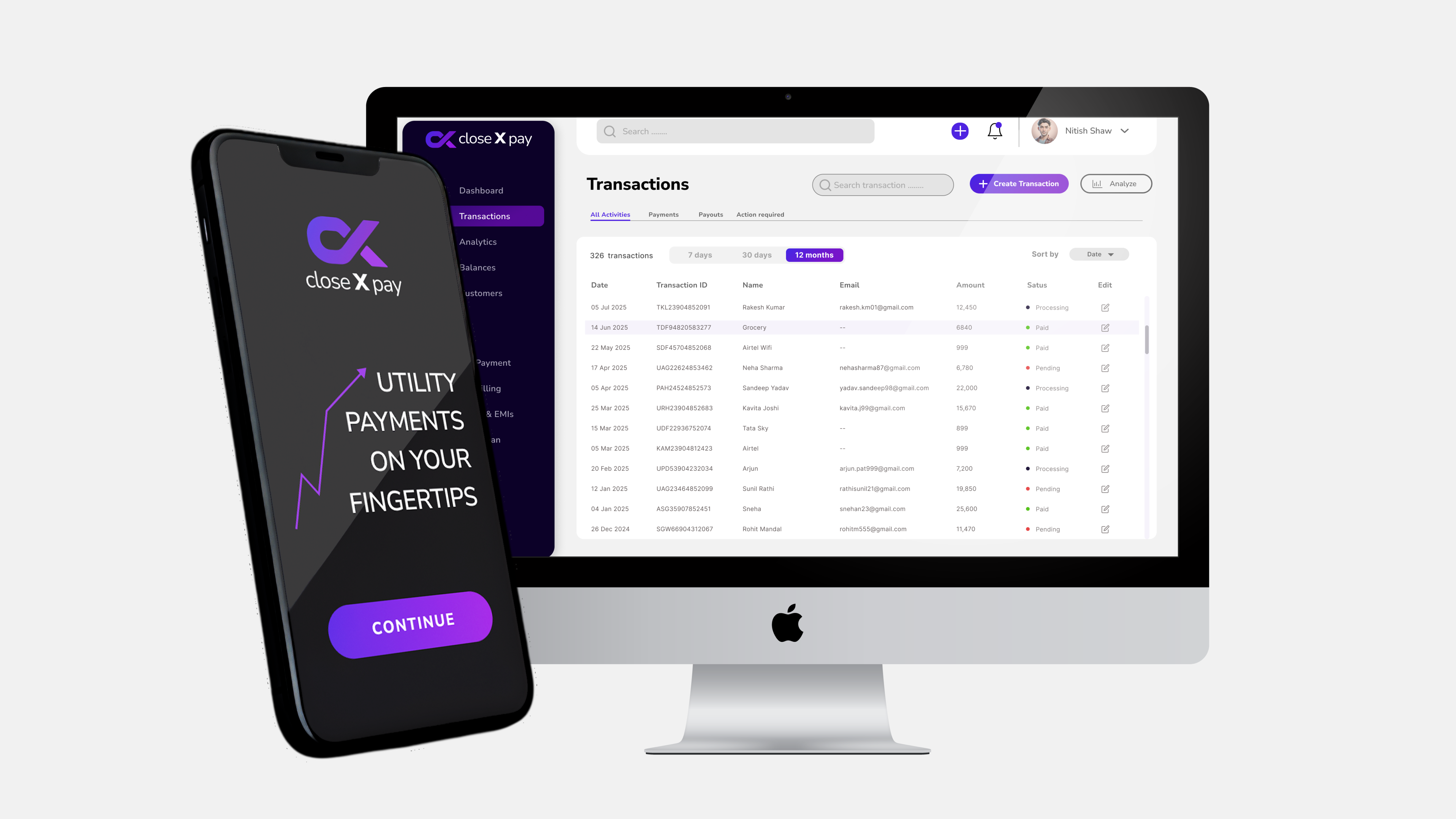
CloseXpay’s website experience was restructured to improve product communication, onboarding clarity, and trust perception across the customer journey. The focus was reducing ambiguity while creating a more credible and cohesive fintech narrative.
Building stronger financial trust through product perception | CloseXpay
Restructuring product communication, onboarding clarity, and trust signaling for a modern digital payments experience.
Outcome
Increased Brand Clarity and User Trust
Focus
Brand and Product Clarity
Website positioning systems
Strategic websites designed for clarity, positioning, and market perception.
Built for companies where communication clarity, trust perception, differentiation, and narrative structure directly influence growth, conversion, and market understanding.
Early-stage SaaS companies refining positioning
Fintech platforms building user trust
AI startups struggling with product clarity
B2B products with complex narratives
Companies repositioning for growth
Founders preparing for fundraising
Products with weak website conversion clarity
Brands expanding into competitive markets
Operational products needing clearer communication
Businesses with inconsistent messaging systems
Startups with confusing homepage narratives
Products hidden behind technical language
Companies struggling to explain differentiation
Multi-product businesses lacking cohesion
Teams rebuilding market perception
Brands with visually strong but strategically weak websites
Complex SaaS products needing simplified communication
Products with fragmented brand systems
Websites failing to communicate trust
Companies improving positioning before scaling acquisition
Outcomes
Better positioning reduces confusion before users even evaluate the product itself.
The objective is not visual polish alone. The objective is improving understanding, strengthening market perception, and helping users trust, remember, and act on the brand with less hesitation.
Clearer brand positioning
Users understood what the company does, who it serves, and why it matters without interpretive friction.
Stronger trust perception
Web experiences felt more credible, structured, and reliable across messaging, visuals, and conversion touchpoints.
Reduced narrative confusion
Website structure and messaging became more cohesive, helping users navigate products and decisions with clarity.
Improved conversion readiness
Clearer positioning and communication systems created stronger alignment between user intent and business action.
Process
Workflow
Structured around positioning clarity, narrative consistency, strategic communication, and scalable website systems that improve trust and market perception.
STEP 01
Positioning & Narrative Audit
Identifying where messaging confusion, weak differentiation, unclear structure, and trust gaps begin affecting user understanding.
STEP 02
Website Structure Mapping
Mapping page hierarchy, messaging flow, user intent, conversion paths, content architecture, and communication sequencing across the website.
STEP 03
Positioning System Restructuring
Restructuring headlines, sections, narratives, visual hierarchy, and brand communication into a clearer and more scalable positioning system.
STEP 04
Refinement & Conversion Clarity
Refining communication through narrative reviews, trust evaluation, stakeholder feedback, usability analysis, and conversion-focused adjustments.
START A CONVERSATION
Turn your website into a
clearer business narrative.
Usually replies within a few hours
Frequently
Asked
Questions
Questions teams usually ask around onboarding, trust systems, product clarity, dashboards, and operational UX.
We work on fintech platforms, operational software, dashboards, onboarding systems, analytics tools, infrastructure products, and trust-heavy digital experiences where clarity directly affects user decisions.