Payments · Fintech · Product Systems
Designing trust into a fintech onboarding system.
Improving onboarding clarity, reducing hesitation, and building trust through structured UX systems, authentication flows, and operational product direction.
Focused on how users interpret the product before committing financial information.
Industry
Fintech · Payments · UPI
Scope
Branding, UX, Product Direction
Focus
Trust, Clarity, Conversion

Context
The product worked.
But trust was missing.
RupeeFlow operates in a category where users submit sensitive business and financial information early in the onboarding process.
The challenge was not functionality. The challenge was interpretation.
Users hesitated before committing. That hesitation weakened onboarding confidence and increased friction throughout the product journey.
Brand Identity System
Trust perception was designed before onboarding even began.
The visual identity system was structured to feel operationally modern, financially reliable, and frictionless across product touchpoints.
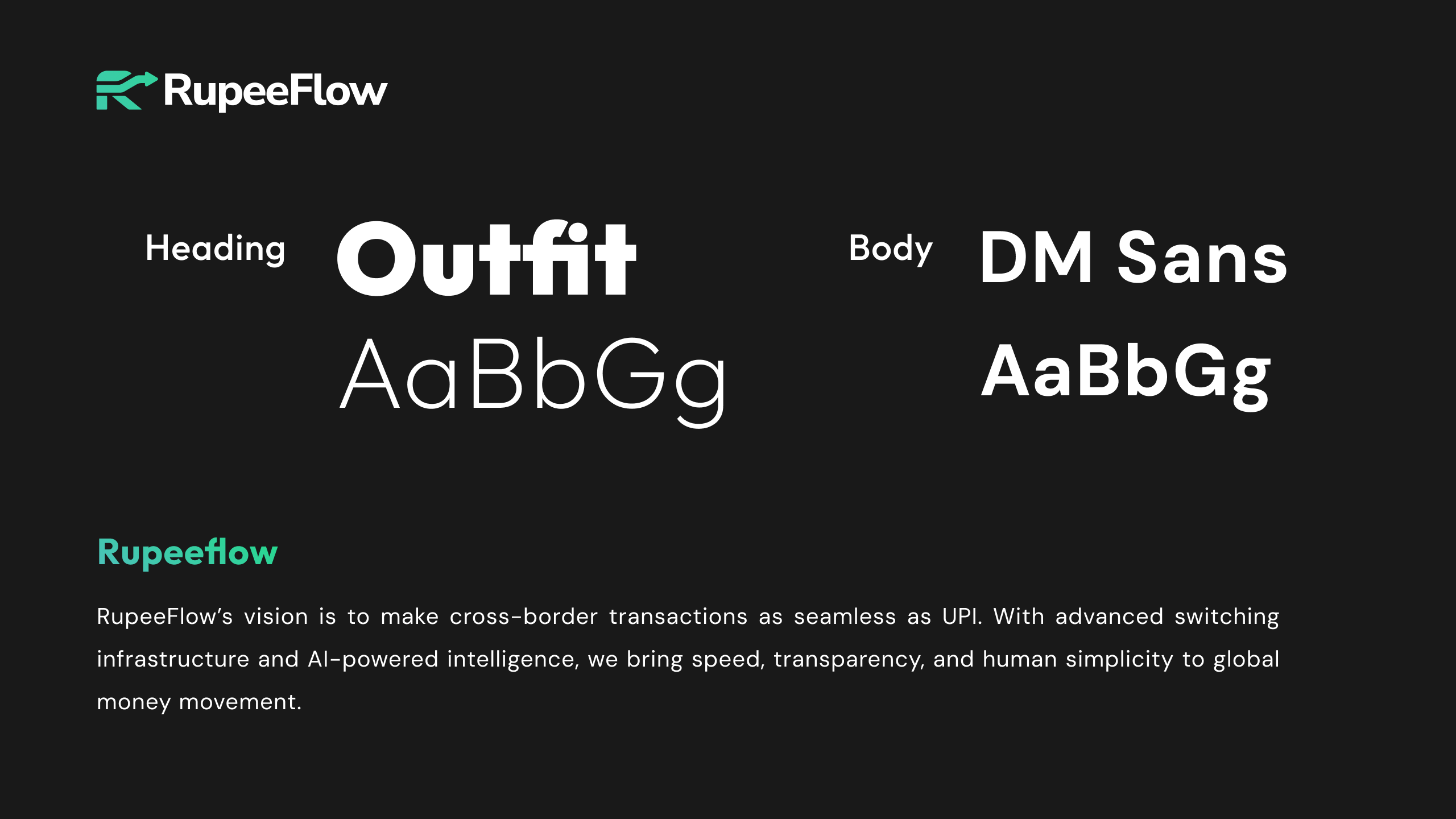
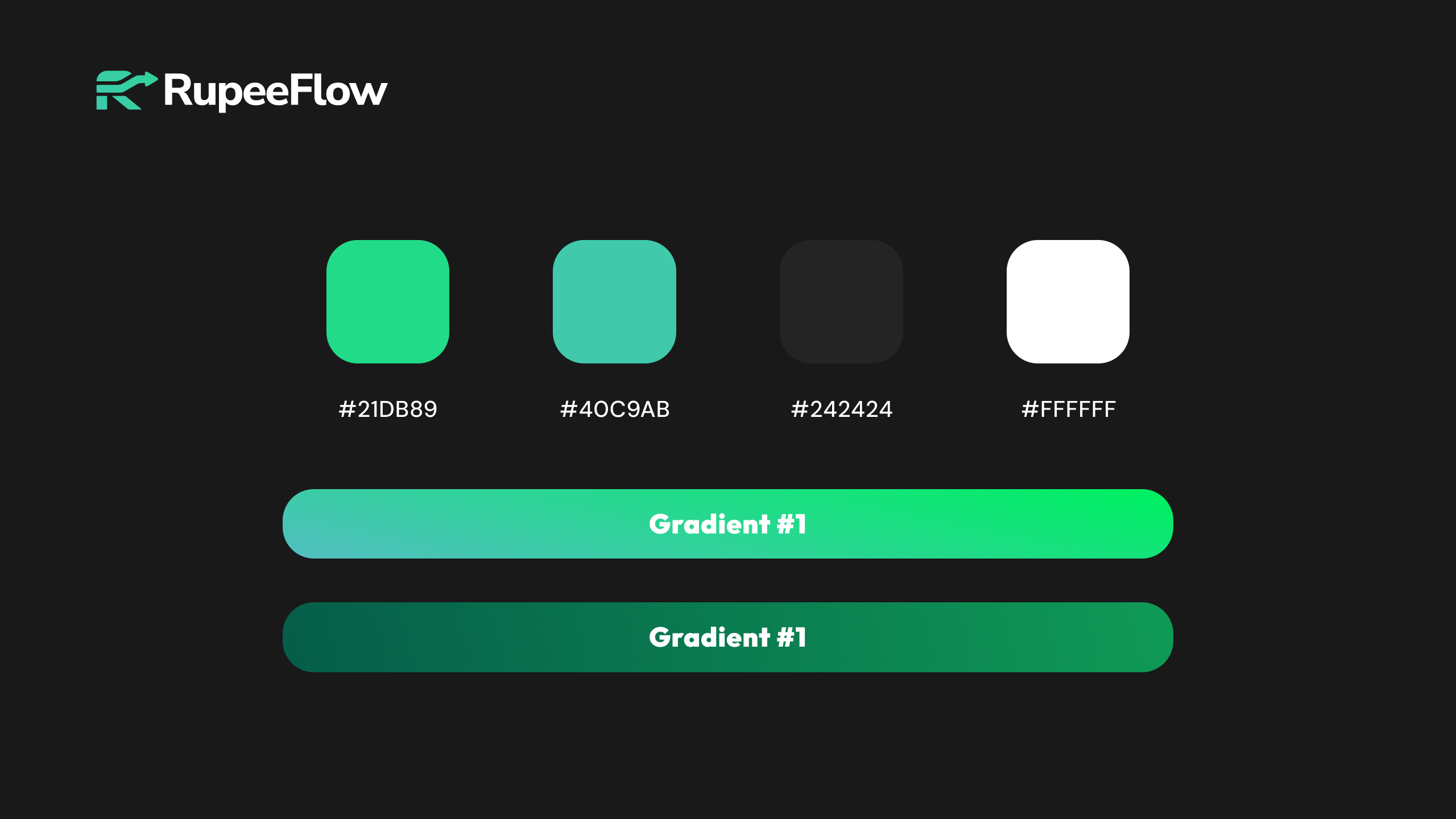

The brand system established perception. The authentication layer reinforced credibility. The onboarding system then carried users through operational verification with greater clarity and reduced hesitation.
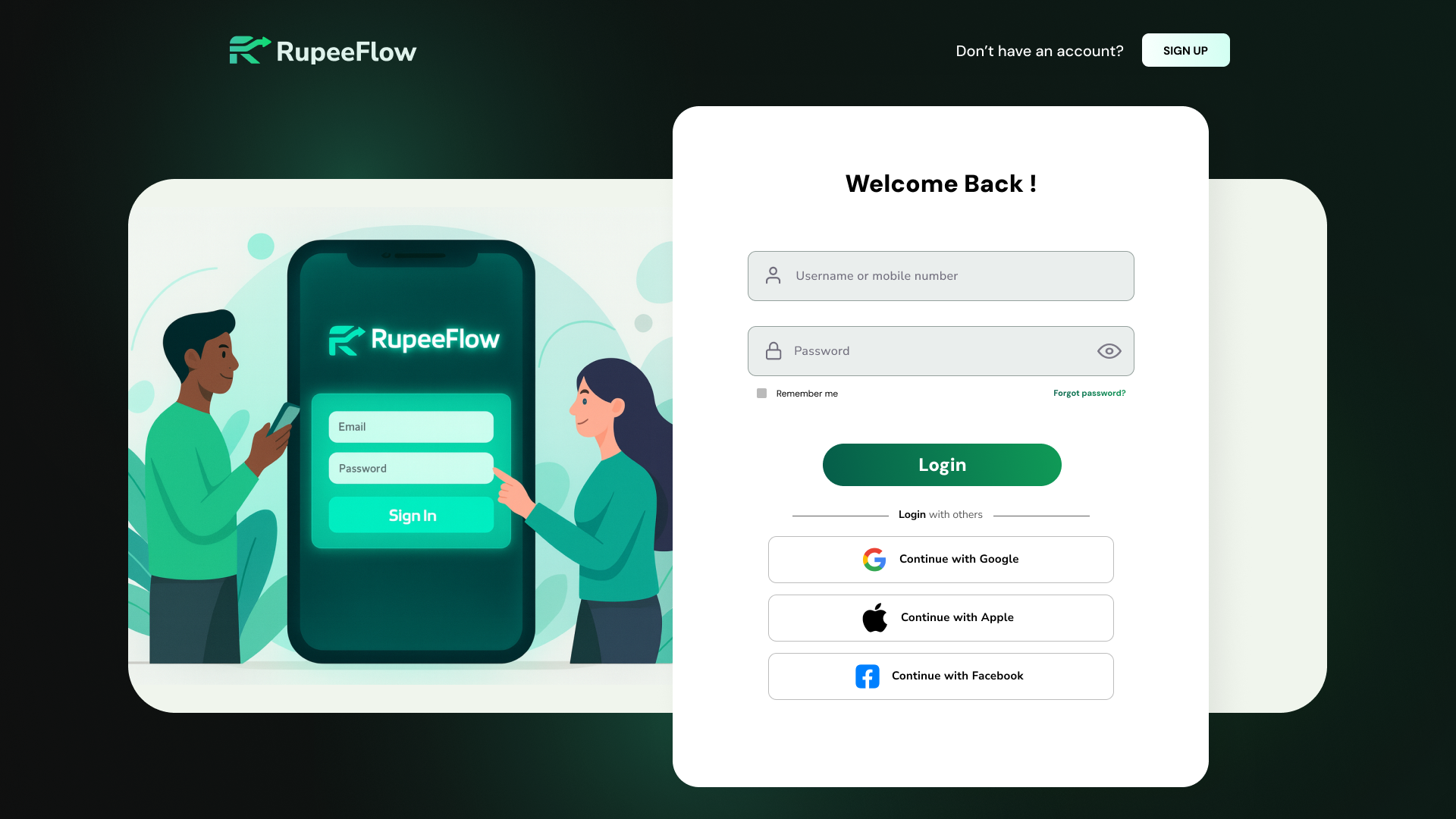
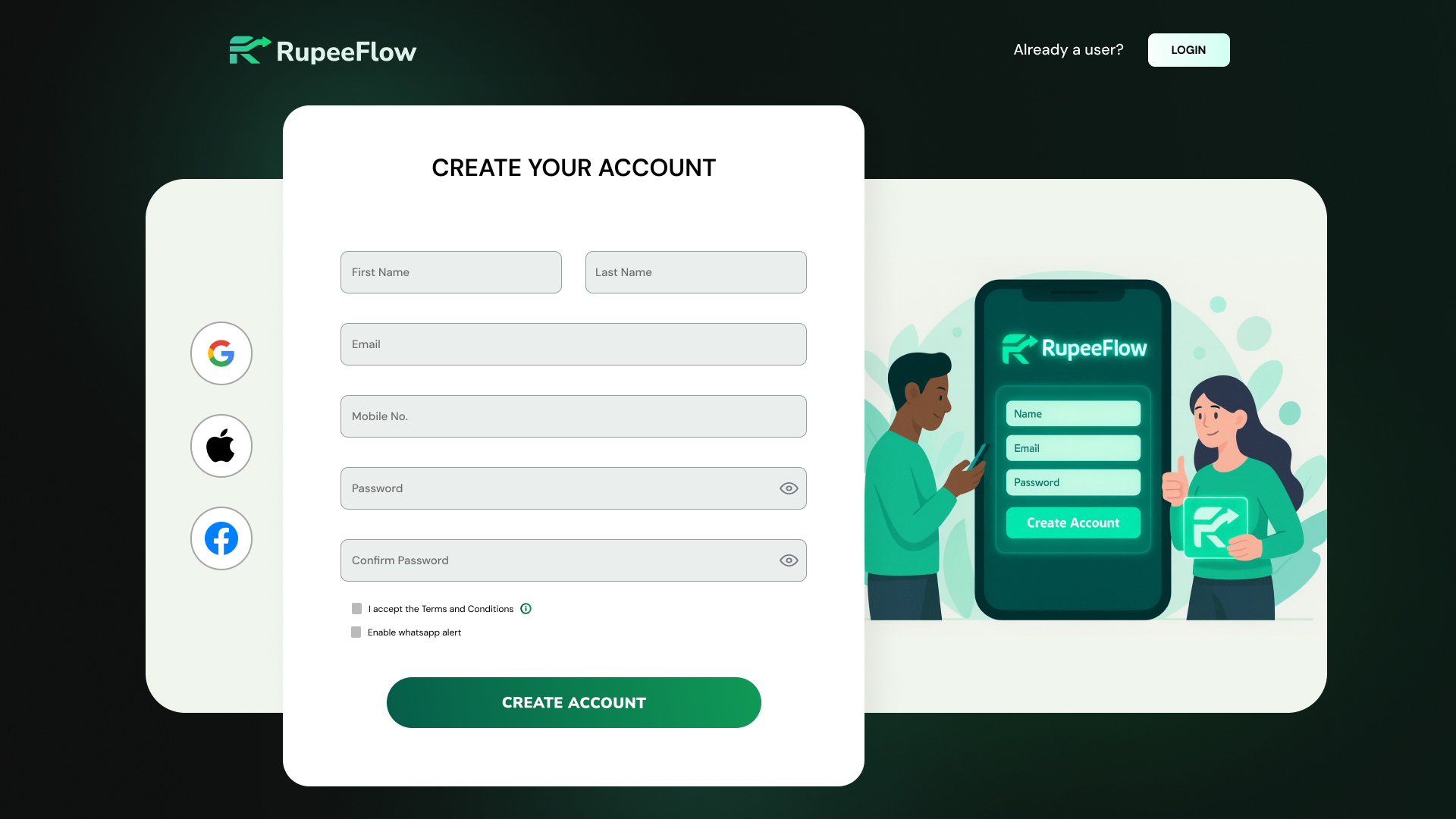
Authentication Experience
The first interaction was designed to feel simple, safe, and familiar.
Authentication flows were structured to reduce intimidation while maintaining financial credibility and operational clarity.
Friction Mapping
Clarity problems rarely appear as obvious UX problems.
KYC appeared before users understood the system
No clear sense of progress during onboarding
Each step felt isolated instead of cumulative
Lack of context around why information was required
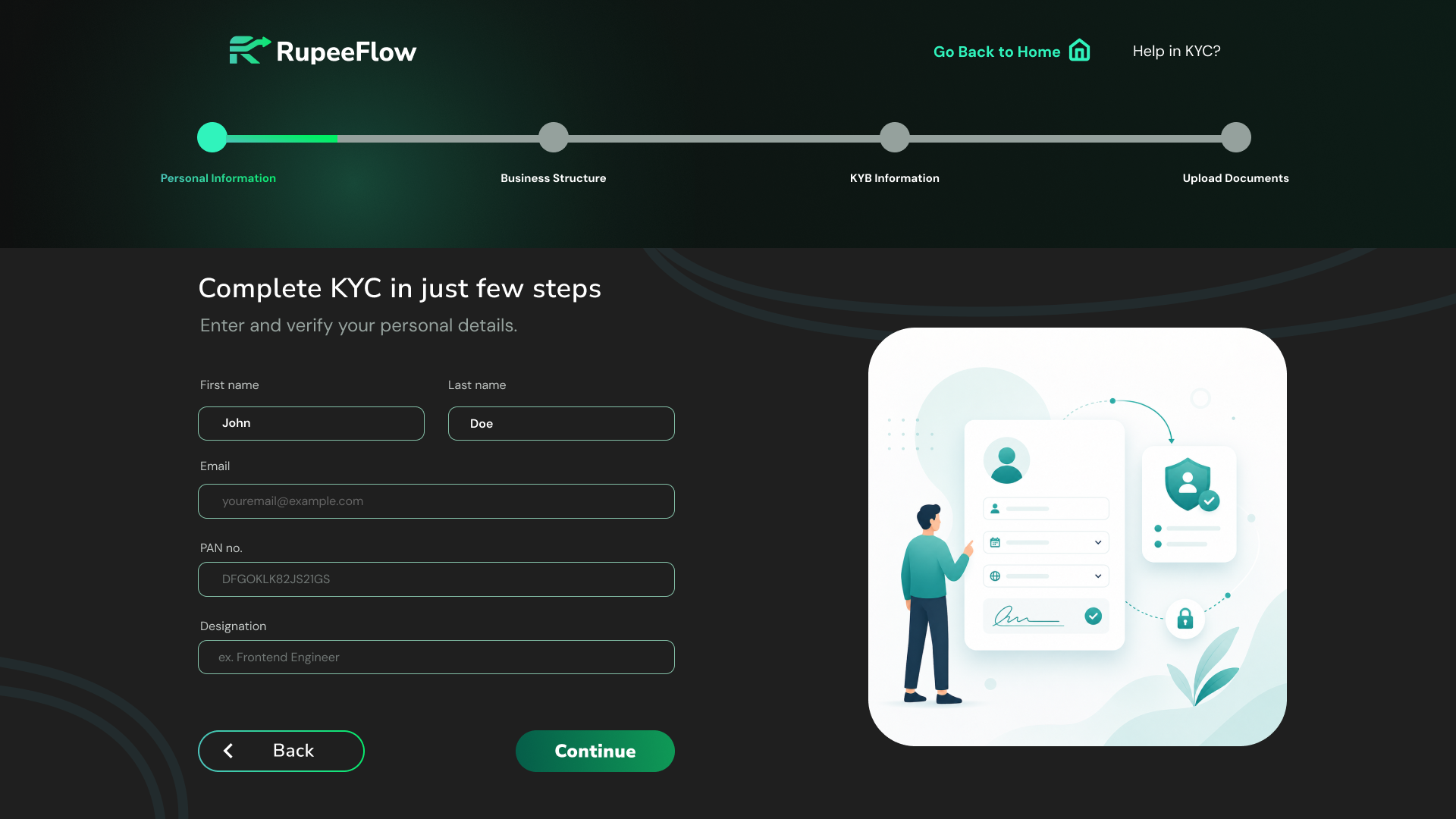
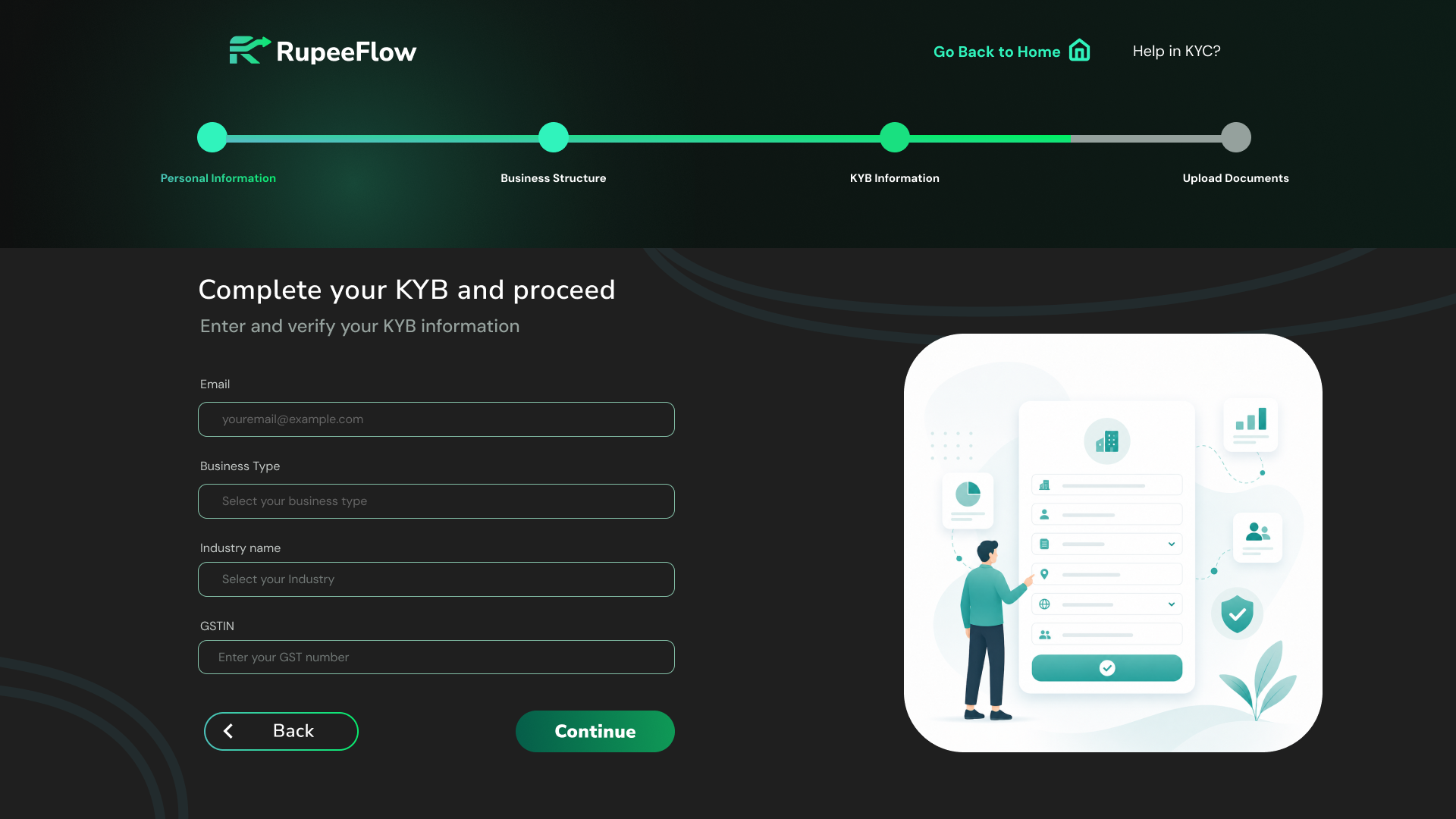
Product UX Direction
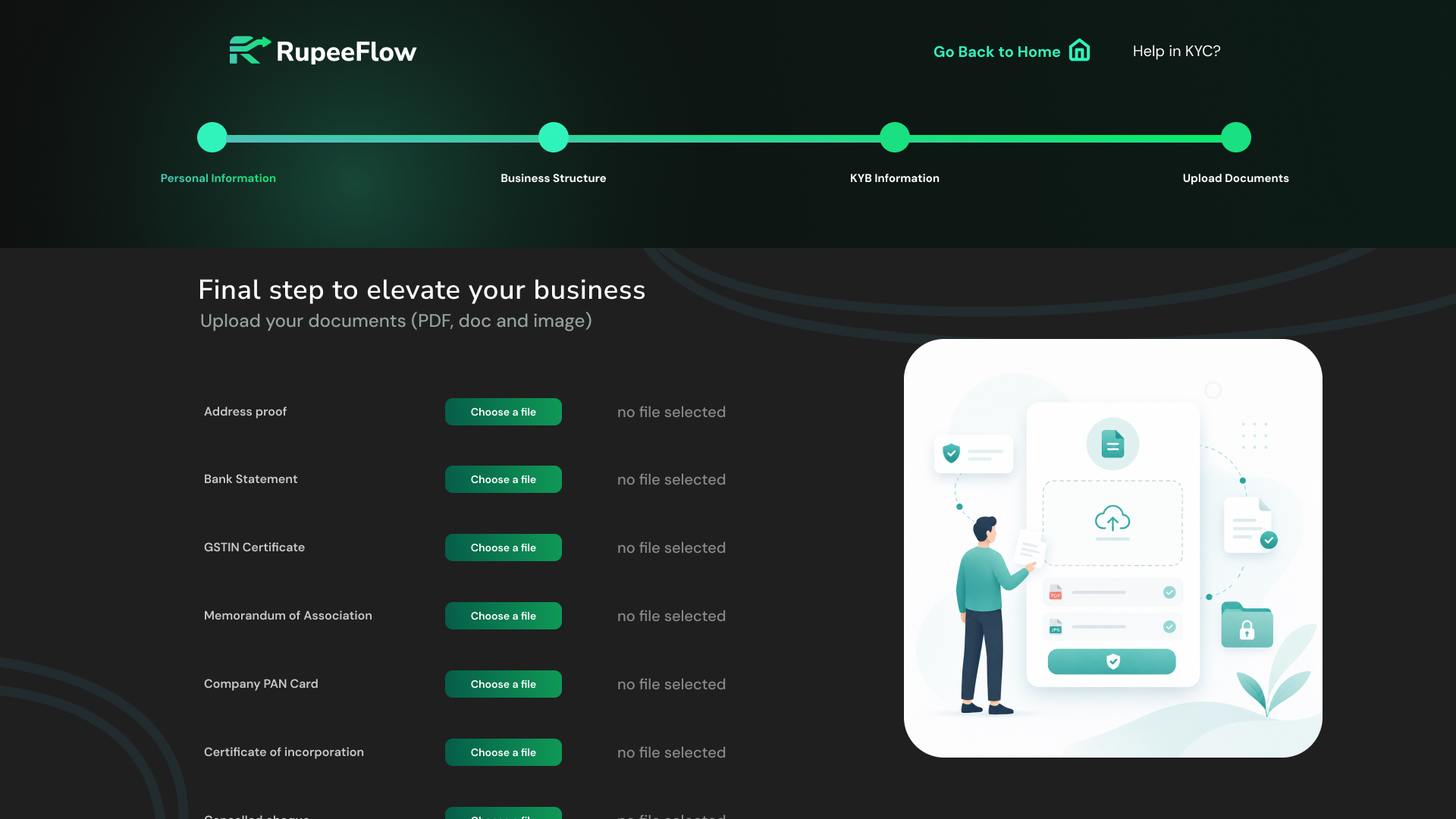
Onboarding was restructured as a trust-building system.
The onboarding flow was redesigned as a progressive system instead of a disconnected form sequence.
Website UX Direction
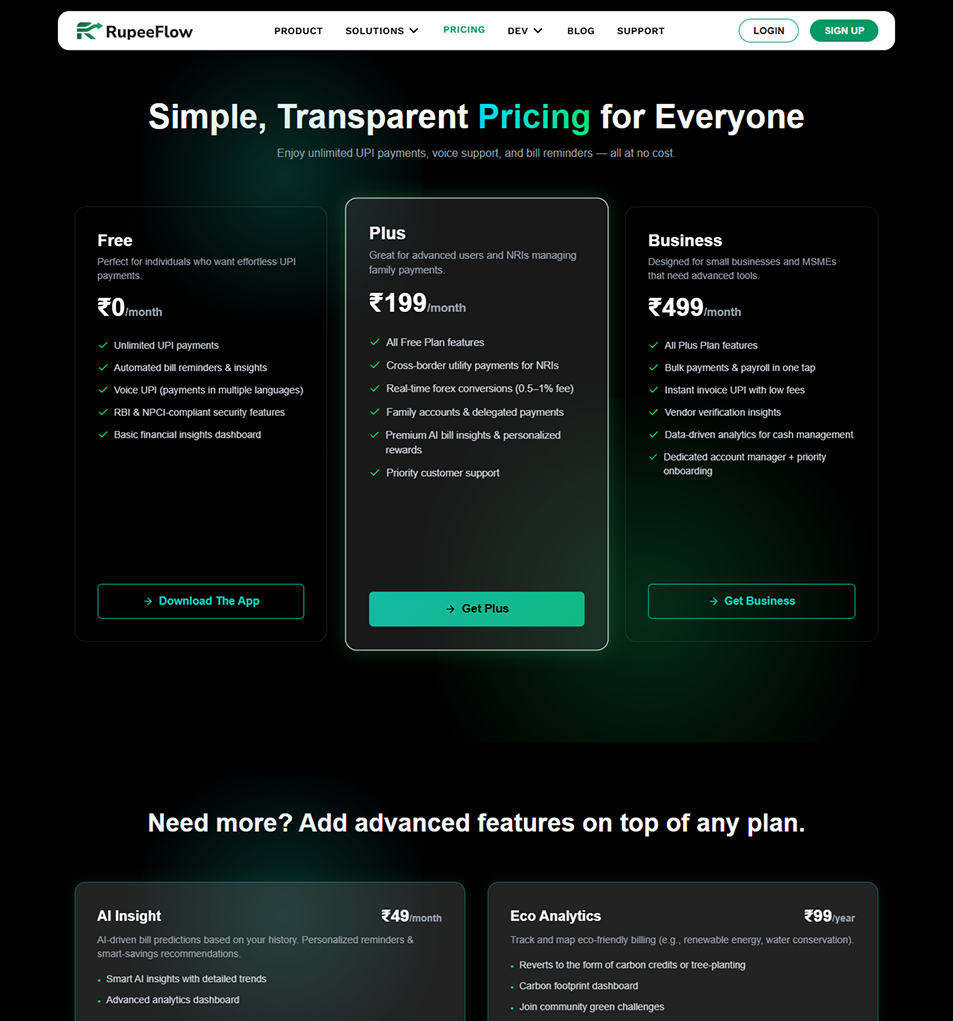
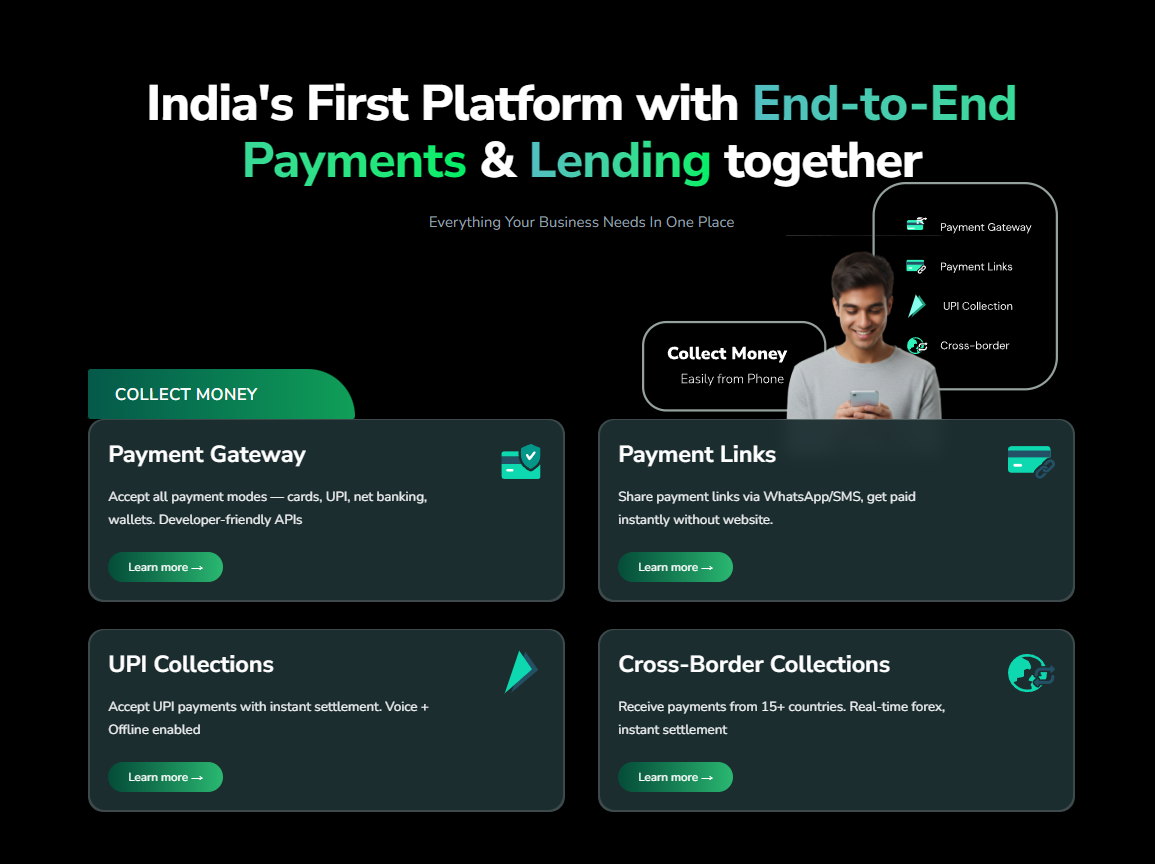
The website became a clarity layer, not a marketing layer.
- • Clear articulation of product capability
- • Reduced ambiguity in positioning
- • Messaging aligned with product behavior
- • Trust signals over visual noise

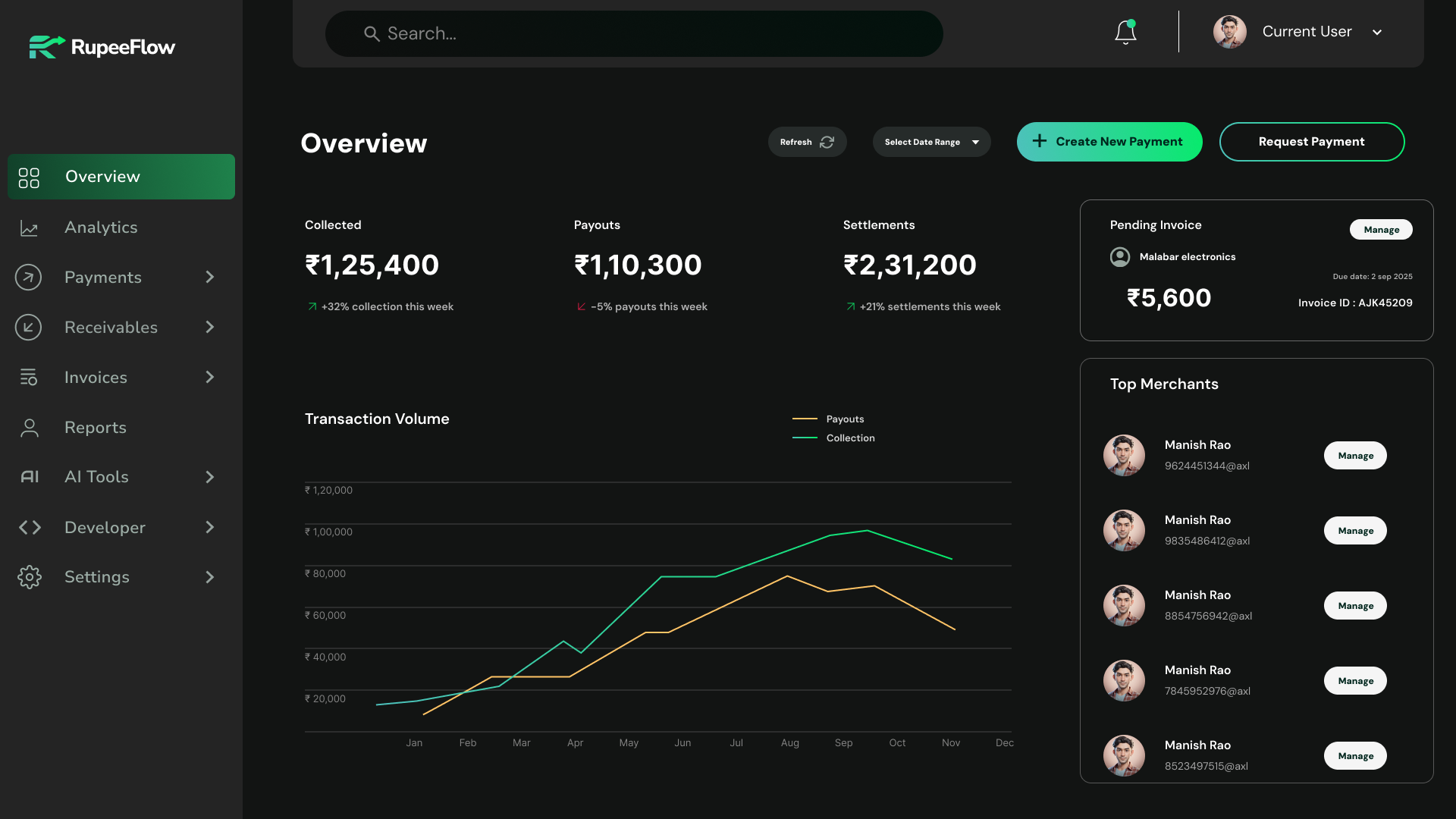
Dashboard UX Direction
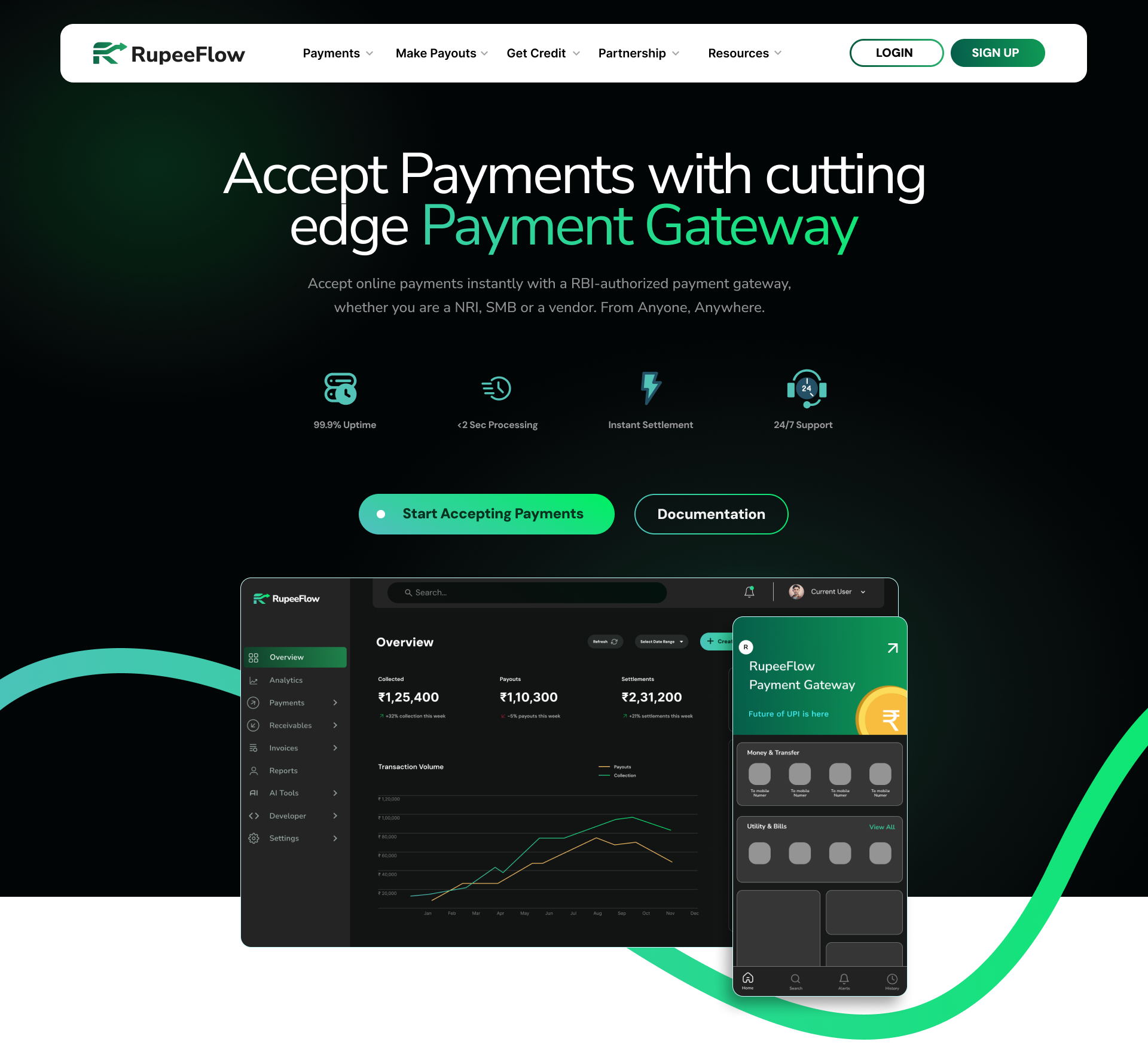
Financial visibility was designed to feel operationally safe.
- • Reduced cognitive load in financial monitoring
- • Clear transaction hierarchy and visibility
- • Improved operational confidence
- • Faster interpretation during decision-making
Outcome
Reduced hesitation.
Increased clarity.
Improved onboarding clarity and progression
Reduced hesitation during KYC stages
Stronger perceived trust in the product
Better alignment between product and user expectations
Reduced need for explanation during demos
Improved narrative consistency across touchpoints
Insight
“In fintech, onboarding is where trust is either built or lost.”
Improving structure and clarity at this stage directly impacts conversion, perception, and long-term product confidence.
START A CONVERSATION
If onboarding friction is slowing
growth, clarity usually helps.
Usually replies within a few hours